Important things to know
As Business Analysts, we are often described as the “bridge” between business, its users and technology. That sounds noble, but being a BA isn’t just about diagrams, requirements, beautiful dashboards or fancy tools, it’s about the people, and people are messy, unpredictable, and sometimes downright confusing.
That’s why the best BAs don’t just rely on technical know-how. They build and lean into their soft skills, as the human-centered abilities that make you the person stakeholders trust, developers respect, and executives actually listen to.
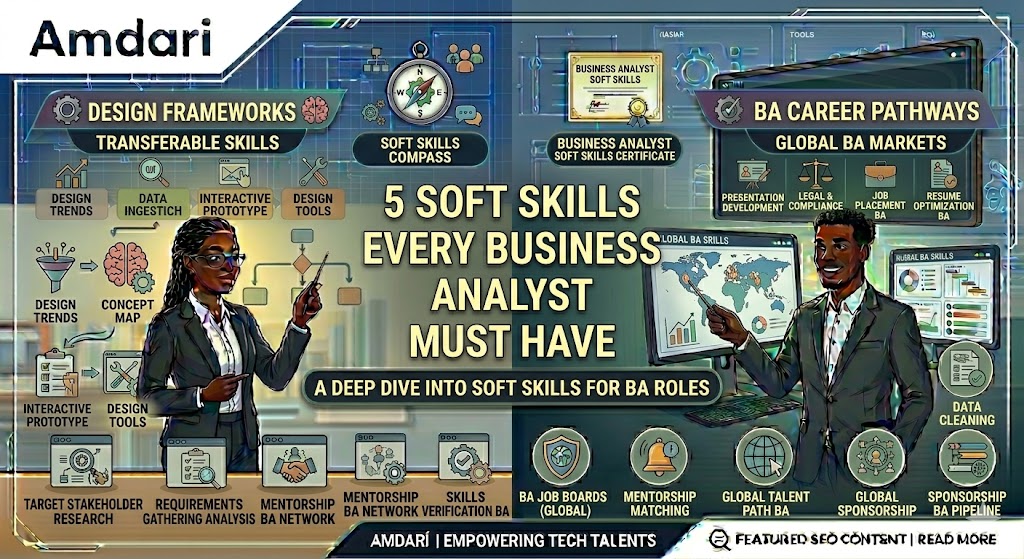
A Global International Institute of Business Analysis (IIBA) survey reveals that BAs with strong soft skills deliver 3x more successful requirements outcomes. Further research carried out by PMI revealed that soft skills account for 60–80% of project success, hence soft skills are not a “nice-to-have”. So, let’s talk about five key soft skills every BA needs.
- Communication
Have you ever tried explaining how Netflix works to your grandma? If you say, “It’s a streaming platform with on-demand content,” she’ll likely stare blankly at you. But if you say, “It’s like renting movies, but they magically appear on your TV whenever you want,” chances are, she’ll get it faster.
The same thing applies with your projects. Business Leads want revenue, turnover and profit, developers want user-stories and acceptance criteria, and end-users want plain English (not KJV). You’re responsible for making sure everyone is on the same page.
IIBA Competency Model shows that 70% of BA work involves communication, collaboration, and stakeholder engagement, and poor communication is the #1 cause of project failure in 56% of cases as written by the Project Management Institute, so how can you correct this?
- Tailor your message to your audience. Know your audience, and speak their language
- Use analogies and simple relatable examples to make complex ideas relatable.
- Confirm understanding, don’t assume silence means agreement. Ask for inputs, suggestions and clarifications
Communication is not about plenty of words, but making sure your message is received in the language of the listen and a shared understanding is gained.
2. Active Listening
Many people will say this is a part of communication, but active listening involves going beyond the words. Say you’re speaking with a friend and she says, “I’m fine,” but she’s s sighing loudly, and snapping at every question you ask, you don’t need a doctor to confirm that she is not fine.
Stakeholder misalignment contributes to 37% of project delays (IIBA), and research shows active listening can cut misunderstandings by 40% (Jobera). As BAs, that means fewer missed requirements, fewer reworks, and smoother collaboration across teams
Stakeholders often say things like, “We need faster reporting.” But what they really mean could be “real-time dashboards” or “monthly summaries that don’t take three days to prepare.” A BA who listens deeply discovers the real need and saves the project from going off track.
How do you listen actively?
- Probe further. Ask clarifying questions to dig deeper.
- Pay attention to the non-verbal cues (tone, pauses, and body language, breathing, etc), they usually speak louder than the words.
- Summarize back what you heard to confirm understanding.
- Listening is detective work.
People often express the way they feel (symptoms) as the problem, however, active listening would help you catch what’s not being said, and make a diagnosis. This could also help the stakeholder reach for the root cause they didn’t know existed.
Dear Business Analyst,
People don’t come with neat user manuals. They come with quirks, conflicting priorities, and shifting needs. That’s why soft skills aren’t optional. Don’t just sharpen your technical toolkit. Pick one soft skill today and practice it intentionally. Small steps compound into big impact.
Because at the end of the day, the best BAs aren’t just analysts. They’re communicators, listeners, problem-solvers, adapters, and negotiators. They’re the ones who make projects not only successful, but enjoyable and easy for everyone involved.
Best,
Bhetty
3. Critical Thinking & Problem-Solving
You're cooking a tasty family dinner. Your toddler hates onions, your teenager is a vegetarian, and your spouse likes their meal spicy. Do you cook 3 different meals?
No! You adapt.
You make a base dish, keep onions optional, add protein choices, and serve extra spice on the side. That way, everyone is satisfied, and you don't lose your mind.
Projects are exactly like cooking with limited ingredients. Stakeholders want different flavors (simplicity vs. customization, speed vs. thoroughness). Critical thinking helps you analyze workflows, spot trade-offs, and propose solutions that balance priorities.
You don’t just solve problems, you solve them in a way that makes everyone feel heard and included.
How to think critically as a BA:
- Break problems into smaller, digestible parts (like recipe steps).
- Look for root causes, not just symptoms (why is reporting slow—data quality or tool limitations?).
- Weigh trade-offs before proposing solutions (speed vs. accuracy, cost vs. value).
- Aim for solutions that create buy-in, not just quick fixes.
Critical thinking isn’t about being the smartest person in the room, but being the one who can turn conflicting inputs into a solution everyone can live with. Just like cooking for a picky family, don’t aim for perfection, create balance, creativity, and make sure no one leaves the table hungry.
4. Adaptability
Have you planned a picnic so perfectly? You checked the weather forecast and the weather is clear, you wear your finest casual outfit and lay out your picnic on the green dry grass, only for the rains to come down in the middle of the treat?
Well, that’s a sore sight.
Projects change constantly due to the dynamism of the business world. It could be a new competitor, shifting priorities, evolving markets, changing consumer needs. Adaptability means pivoting without losing momentum. The best BAs don’t just survive these changes, they manage them effectively..
Here are ways you can stay adaptable:
- Expect change as normal, rather than a crisis.
- Stay calm when plans shift. Think about the impacts and benefits and logically assess them
- Reframe challenges as opportunities to add value.
- Study trends and learn to predict changes.
Being flexible is like dancing, it may not feel like the right step, but being able to mould it in a more productive way makes the difference,it isn’t about giving up control, it’s staying in control and being resourceful A
McKinsey study found that employees with high adaptability are 2.5x more likely to have higher performance and contribute more to organizational success. Be that Business Analyst that can be banked on to steer the boat in a storm.
5. Relationship Building & Negotiation
According to the Project Management Institute, strong stakeholder relationships and negotiation skills are directly linked to project success, with poor stakeholder engagement contributing to 37% of project delays. Harvard Business Review also notes that effective negotiators improve collaboration outcomes by up to 30% compared to teams without them.
Projects are full of competing interests and priorities. Stakeholders want different outcomes, everybody wants to be heard and seen, but not all ideas can be prioritized at the same time. Relationship-building earns you trust, while negotiation helps you find middle ground. Together, they ensure there's a common ground and a consensus
Think of it like you’re moving apartments and you ask your friends for help, but they are busy, tired, and not exactly thrilled about carrying boxes up three flights of stairs. Do you demand their help?
No! You promise pizza and drinks, crack a few jokes, and make it feel less like a chore. It can make them become more willing to pitch in. That’s relationship-building with a side of negotiation.
Here’s how you can build better relationships and negotiate as a BA:
- Be consistent and reliable. Trust is built over time.
- Show appreciation for others’ contributions (a simple “thank you” goes a long way).
- Listen actively before proposing compromises.
- Frame negotiation as collaboration, not confrontation.
- Aim for win-win solutions where everyone feels included.
Relationship-building and negotiation aren’t about being “nice” or “tough”, they are about being emotionally intelligent and influential without exerting a lot of authority. BAs use their people skills to gain trust and compromise to keep projects moving forward. When people feel respected and heard, they’ll go the extra mile, and that’s how you turn stakeholders into allies. Business analysts with just the skills and no experience to show quantifiable achievement to potential recruiters stay longer in the market. That is why we put together our low-risk business analysis work experience program to help you work on projects with real business impacts and increase your chances of landing jobs. Have we helped others before you? Yes. Please watch some of our testimonials here.
You can book a free career consultation call with our team to know how we can help you get started. Click here to book.