Important things to know
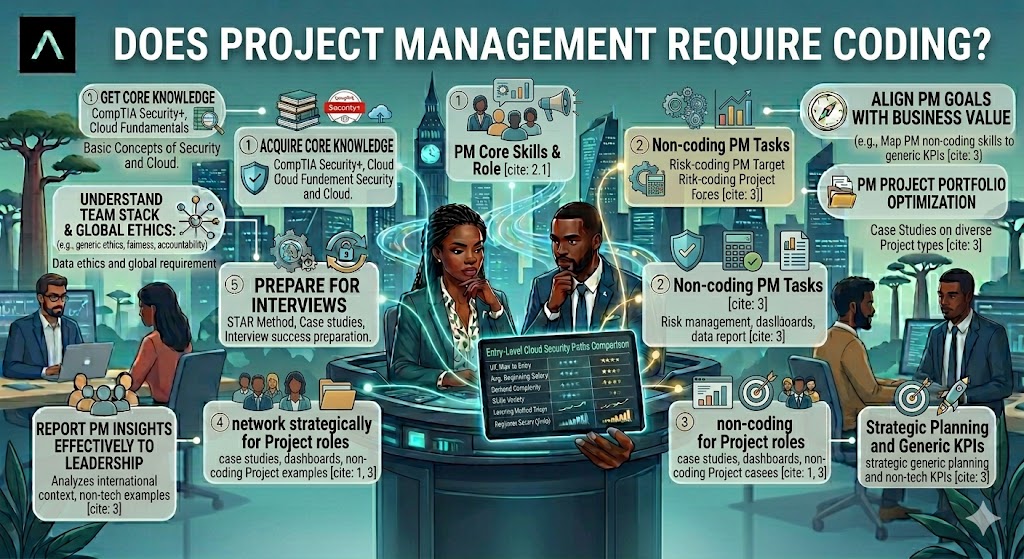
In today’s fast-moving digital world, many people who want to transition to the tech industry often ask an important question: “Do I need to learn coding to become an IT project manager?” It’s a reasonable concern, especially since technology careers are often closely linked with programming skills.
However, IT project management is quite different from software development. Instead of writing code, an IT project manager focuses on planning, organizing, and delivering technology-related projects. These projects may include developing mobile applications, implementing new software systems, or managing large-scale digital transformations. The role centers on leadership and coordination rather than technical execution, making it accessible to individuals from both technical and non-technical backgrounds.
What Does an IT Project Manager Do?
An IT project manager is responsible for overseeing the entire lifecycle of a project. From the initial idea to the final delivery, they ensure that every phase runs smoothly and meets the intended goals.
Their work involves defining the project’s objectives, setting realistic timelines, and coordinating team efforts. They act as a central point of communication between developers, designers, stakeholders, and clients. By monitoring progress and addressing issues as they arise, they help keep the project on track.
In addition, IT project managers are responsible for managing risks, solving problems, and ensuring that projects are completed within the agreed budget. Their role is essential in aligning technical work with business goals, making them a vital part of any organization.
Do I Need to Learn Coding to Become an IT Project Manager?
The short and clear answer is no, you do not need to learn coding to become an IT project manager. While coding is an important skill for developers, it is not a requirement for those managing projects.
Many people mistakenly believe that every job in the IT field requires programming knowledge. This misconception often discourages individuals who are interested in management roles. In reality, IT is a diverse field that includes various non-coding roles such as project management, business analysis, and IT support.
The primary responsibility of an IT project manager is to ensure that projects are delivered successfully. This involves coordinating teams, managing timelines, and communicating effectively with stakeholders. These tasks rely more on organizational and interpersonal skills than on technical coding abilities.
Essential Skills for IT Project Managers
To succeed as an IT project manager, certain skills are far more important than coding. Leadership is one of the most critical abilities, as it allows you to guide teams, resolve conflicts, and maintain motivation throughout the project lifecycle.
Communication is equally important. An IT project manager must be able to clearly explain ideas and expectations to both technical and non-technical team members. This ensures that everyone understands their roles and responsibilities.
Planning and risk management are also key components of the role. Every project comes with uncertainties, and a good project manager must anticipate potential challenges and prepare solutions in advance. Additionally, managing budgets and allocating resources effectively ensures that projects are completed without unnecessary delays or costs.
When Coding Skills Can Be Helpful
Although coding is not required, having a basic understanding of programming concepts can be beneficial in certain situations. For example, when working closely with developers, knowing how coding works can help you better understand their tasks and challenges.
This knowledge can improve communication and reduce misunderstandings between you and your technical team. It can also help you make more informed decisions when evaluating project timelines or assessing technical limitations.
Understanding coding at a basic level does not mean you need to write complex programs. Instead, it simply allows you to have more meaningful conversations with your team and gain insight into the technical aspects of a project.
When Coding Skills Are Not Necessary
In many cases, coding skills are not needed at all. IT project managers often focus on strategy, planning, and coordination rather than technical execution.
For example, at Amdari, the project manager’s role is to ensure that all parts of the project come together effectively. This requires strong organizational and leadership skills rather than technical expertise.
Even in technical environments, project managers rely on subject matter experts to handle coding and development tasks. Their responsibility is to guide the project and ensure that it meets its objectives.
Career Path to Becoming an IT Project Manager
The journey to becoming an IT project manager can vary depending on your background. Many professionals start with a degree in fields such as information technology, computer science, or business administration. However, a formal degree is not always required.
Gaining practical experience is often more important. Entry-level roles such as project coordinator, business analyst, or IT support specialist can provide valuable exposure to project management processes. Over time, this experience can lead to more advanced roles in project management.
So, do I need to learn coding to become an IT project manager? The answer is clear: you do not need coding skills to succeed in this role.
The key to becoming a successful IT project manager lies in developing strong leadership, communication, and organizational skills. By gaining practical hands-on experience and staying updated with industry trends, you can build a rewarding career in IT project management without writing a single line of code. Learn how here.