Important things to know
One of the most common questions I get from people transitioning into project management is this:
"Apart from Project Manager, what other roles can I apply for?"
The truth is that project management exists in many forms across different industries, and the job titles are not always obvious. Many organizations structure their teams differently, which means that several roles involve project management responsibilities even if “Project Manager” is not in the title.
Understanding these roles can help you expand your job search and position yourself strategically in the job market.
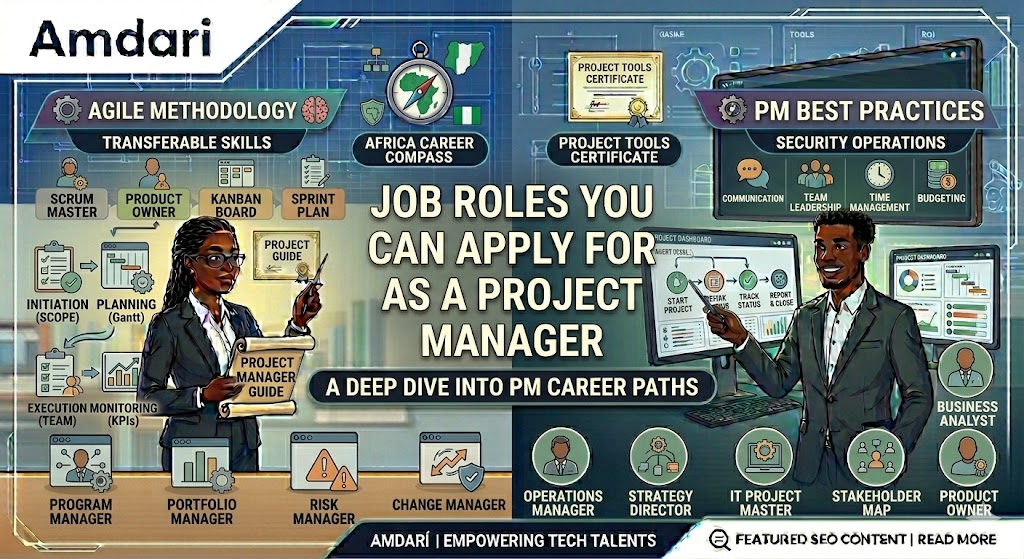
Here are some roles you can apply for if you have project management skills or experience.
Project Manager
This is the most recognized role in the field.
Project Managers are responsible for leading projects from initiation to completion, ensuring that the project delivers its objectives within scope, time, and budget.
Typical responsibilities include:
• Developing project plans and timelines
• Coordinating cross-functional teams
• Managing risks and issues
• Monitoring project progress
• Communicating updates to stakeholders
Project Managers are needed across industries such as technology, construction, healthcare, finance, and development sectors.
Project Coordinator
For professionals transitioning into project management, this role is often a great entry point.
Project Coordinators support Project Managers by helping to organize project activities and ensure smooth communication across the team.
Their responsibilities often include:
• Scheduling meetings and tracking deliverables
• Maintaining project documentation
• Updating project trackers and dashboards
• Supporting reporting and stakeholder communication
This role helps you gain hands-on exposure to project processes and tools.
Project Support Officer
This role is common in government institutions, consulting firms, and large organizations.
A Project Support Officer focuses on the administrative and operational aspects of project delivery, ensuring that documentation, reporting, and governance processes are properly maintained.
Typical responsibilities include:
• Maintaining project documentation
• Supporting project governance processes
• Updating risk and issue logs
• Assisting with project reporting and updates
This role is particularly valuable for professionals who want to develop strong project management foundations.
Program Manager
While Project Managers oversee a single project, Program Managers manage multiple related projects that contribute to a strategic objective.
They focus more on alignment, outcomes, and benefits realization across projects.
Responsibilities may include:
• Managing a portfolio of related projects
• Coordinating multiple project teams
• Ensuring alignment with organizational strategy
• Managing program-level risks and dependencies
This role typically requires significant project management experience.
Scrum Master
In organizations that use Agile methodologies, Scrum Masters play a key role in helping teams deliver work efficiently.
Their focus is not just on delivery, but also on team performance and continuous improvement.
Responsibilities include:
• Facilitating Agile ceremonies such as sprint planning and retrospectives
• Removing obstacles affecting the team
• Supporting Agile best practices
• Helping teams improve collaboration and productivity
Scrum Masters are especially common in software development and technology teams.
Product Manager
Although product management is slightly different from project management, many professionals transition between these roles.
Product Managers focus on defining what should be built and why, while Project Managers focus on how it gets delivered.
Responsibilities often include:
• Defining product vision and roadmap
• Prioritizing product features
• Collaborating with engineering, design, and business teams
Book a free clarity call with our team to be guided on what roles match your skills best and how we can help you build a portfolio that recruiters cannot resist. Click here.