Important things to know
If you think becoming a Data Analyst is just about learning Excel or building a few charts, it is time for a reality check. The position of Data Analyst in 2026 requires different skills and responsibilities than it needed three years ago. Organizations now use Automation and AI systems to perform their basic reporting tasks because they need analysts who possess both critical thinking skills and data interpretation abilities and can produce practical results. The easiest way to enter this field is not by learning every tool or programming language. The process requires you to establish a distinct route which will help you acquire practical abilities needed for conveying data-based narratives. The Data Analyst career path for 2026 will be presented in this guide which will provide specific steps that beginners can use to achieve their goals.
1. Understand the actual work responsibilities of contemporary data analysts.
The value of a Data Analyst in 2026 will stop being evaluated through their dashboard creation skills. The ability to transform data into insights which lead to business decisions now serves as the new performance metric. Companies seek analysts who possess the ability to explain:
- Why numbers change
- What the impact is
- What actions should be taken next?
A Data Analyst in modern times collaborates with marketing teams, sales teams, operational teams, product development teams. The process of data analysis requires you to comprehend business context, formulate appropriate inquiries and display results through methods which enable non-technical audiences to understand and use the information.
Common Responsibilities of a Data Analyst
- Solving business challenges requires by establishing specific goals for their investigations.
- Cleaning data by removing errors from raw data to create accurate analysis results.
- Detecting trends, patterns and outliers with the analysis of datasets.
- Building visualizations and dashboards which allows users to create interactive displays that show their discovered insights.
- Recommending actionable steps based on your analysis.
“The most excellent analysts of 2026 will not be solely technical; they will be experts in converting data into insightful solutions and decisions.”
2. Begin your journey by selecting a career path which matches your abilities, passions and professional aspirations.
Your learning efficiency increases when you concentrate on specific areas because it helps you avoid feeling overwhelmed.
The primary career paths for 2026 are as follows:
Business and Operations Analyst
A Business Analyst investigates company operations to find methods that enhance business performance. Your work involves analyzing data from sales, finance and operations departments to discover patterns which will help you improve business processes.
The main duties of this position include the following:
- Tracking key performance indicators and business performance metrics.
- Creating dashboards which will be used by leadership teams.
- Evaluating revenue, expenses and operational effectiveness.
- Providing strategic insights which help organizations develop their decision-making capabilities.
“This path is ideal for beginners because it combines data skills with practical business knowledge.”
Product and Growth Analyst
A Product Analyst studies user interactions with products and services. This role exists in technology and digital companies because user interactions determine their revenue growth.
Key responsibilities include
- Analyzing user behavior and conversion funnels
- Tracking retention, churn and engagement metrics
- Supporting experiments and A/B testing
- Identifying opportunities for product improvement
“If you enjoy understanding behavior and seeing the impact of changes in real time, this path offers fast growth and visibility.”
Business Intelligence (BI) Analyst
A BI Analyst builds dashboards and reporting systems that the organization relies on for daily decisions. The position needs people who can create accurate structured reliable work results.
- Key responsibilities include:
- Designing and maintaining dashboards in Power BI or Tableau
- Writing SQL queries to extract and transform data
- Standardizing metrics and reports across the company
- Ensuring consistent and accurate reporting
“This role suits people who enjoy structure, systems, and helping others make data-driven decisions.”
Data-Focused Analyst
The Data-Focused Analyst position requires professionals to analyze raw data through advanced SQL and basic Python programming. The career path requires candidates to have technical skills for performing in-depth research on data sets.
The main job duties include the following tasks:
- Cleaning and transforming extensive data sets
- The execution of complex scientific research to address challenging issues
- The provision of assistance to data science and analytics research groups
- The examination of both standard patterns and unusual behavior patterns through research methods.
“This path becomes powerful once your fundamentals are strong and you are confident working with complex data.”
3. Focus on Fundamentals Before Tools
The basics of a task should be your main focus until you need to use advanced tools and automated systems. The easiest way to learn is to understand data and business logic first. The fundamental principles of analysis exist permanently while the assessment tools used for analysis will continue to evolve.
Fundamental Skills:
- Different data types require different metric systems for measurement
- Business inquiries should begin with the correct questions
- Basic statistics include averages and percentages and trend analysis
The process of data cleaning involves preparing data for analysis.
“A strong foundation in data thinking will make learning tools faster and more effective.”
4. Learn a Small Set of Tools Thoroughly
In 2026, mastering a few key tools is far better than knowing many superficially. Your ability to solve actual problems depends on your understanding of the material which you have already learned.
Beginner-Friendly Toolkit:
- Use Excel or Google Sheets to perform rapid analysis according to logical requirements.
- SQL allows users to retrieve and select data elements from database systems.
- Power BI or Tableau serves as a platform for creating interactive dashboards and presenting data through storytelling methods.
Focus on a few tools that will help you demonstrate skill, then expand gradually.
5. Build Projects That Showcase Your Skills
Employers no longer care primarily about certificates. Employers need evidence showing that you can solve actual business challenges through data analysis. The easiest way to stand out is by building a small portfolio of practical projects.
Project Ideas:
- A dashboard which displays sales trends together with clear business insights
- An analysis that evaluates customer retention together with their engagement metrics
- A dataset cleaning and transformation project which includes written documentation of its entire process
- A business case study which provides an answer to an actual question through data analysis
“Uncomplicated projects can turn into great projects when you lucidly express your thoughts and findings concerning the projects.”
6. Communicate Clearly and Confidently
You need to share your results with others because technical abilities become worthless without this essential skill. Modern Data Analysts spend a significant portion of their time explaining insights to stakeholders. Your career advancement will improve when you develop strong communication skills instead of relying on tool expertise.
Tips for Effective Communication:
- Present insights in plain language.
- Focus on actionable recommendations, not just numbers.
- Summarize complex data in three clear points.
- Keep your presentation to teams brief yet confident.
“Communication separates a good analyst from a great one.”
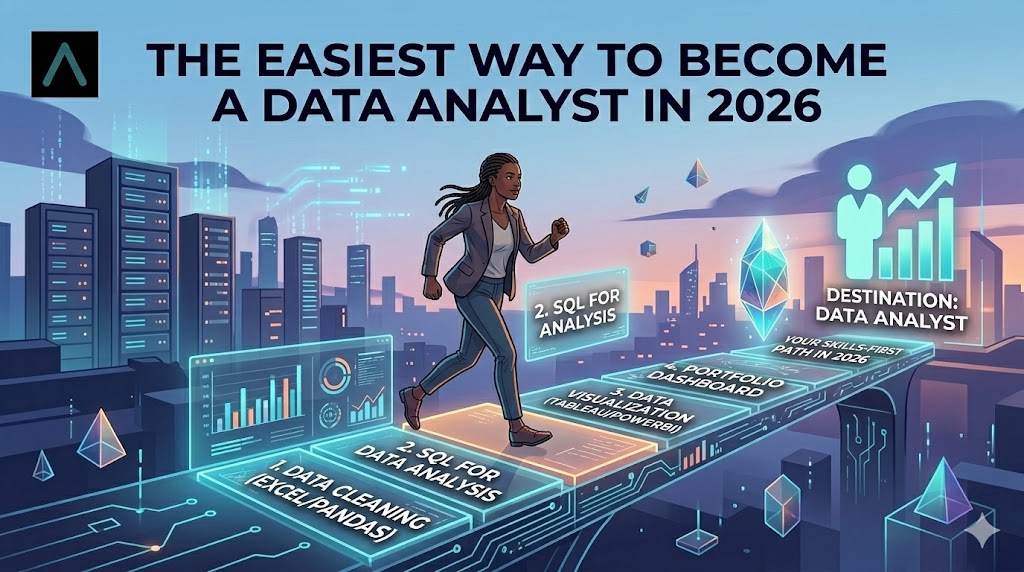
7. Take Action: The Simple Roadmap
The most straightforward method to achieve Data Analyst status in 2026 requires following this complete step-by-step guide which I present here.
The learning process begins with:
- Choosing a career path which matches your personal strengths and interests.
- Studying basic data concepts and statistical methods and business operational procedures.
- Mastering a limited number of tools at an advanced level.
The development of your professional abilities requires you to complete three to five real-world projects. It also requires you to practice delivering insights to different audiences.
The most effective way to build professional connections involves discussing business challenges instead of focusing on available job vacancies.
The easiest way to become a Data Analyst in 2026 is not to chase every new tool or certification. The successful path requires professionals to acquire data analysis skills and problem-solving abilities while they learn how to communicate their findings effectively. Working on data analytics projects is a game changer because that way, you gain valuable experience, especially with projects that have real business impacts in a structured expereince-based learning program like the Amdari Data Analytics work experience program. See more about it here.
Your services will see continuous demand because you can transform unprocessed data into complete business stories. The value of analytical thinking together with clear communication skills will persist despite changes in tools and business needs.