Important things to know
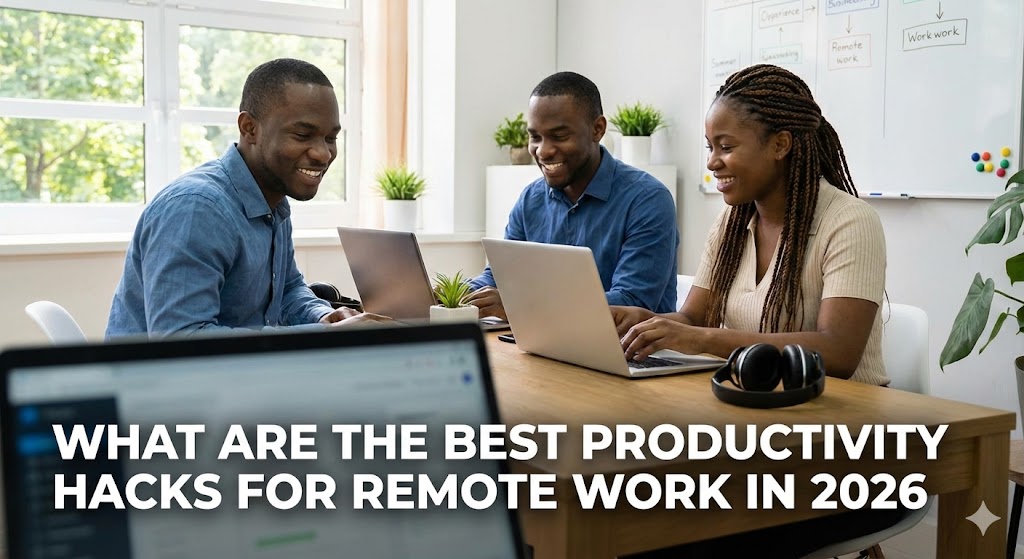
Remote work in 2026 is no longer about figuring things out but about working smarter, protecting focus, and using technology intentionally. With Artificial intelligence (AI) baked into daily workflows and teams spread across time zones, productivity now depends less on working longer hours and more on designing how you work.
The most effective productivity hacks remote professionals are using in 2026
1. Time Blocking with Intent:
Stop letting your calendar run wild. Block chunks of your day for specific types of work:
- Deep work (strategy, design, problem-solving)
- Admin (emails, approvals, quick tasks)
- Meetings
- Recovery (breaks, walks, mental resets)
Clear labelling sets expectations for your brain. Protecting the first one to two hours of the day for deep work has become a non-negotiable habit.
2. AI Assistants for Routine Tasks
Now that AI is everywhere, take real advantage. Set up workflows like:
- Automatic meeting notes via transcription tools
- Summaries of long threads
- Auto-generated follow-ups
- Smart calendar suggestions
This means less grunt work and more creative output.
3. The Right Focus Soundtrack
Focus music has evolved. In 2026, adaptive soundscapes respond to your concentration level, minimizing cognitive fatigue and improving flow. Combined with noise cancellation, these environments reduce distractions without overwhelming the senses.
The result: longer, deeper focus sessions with less mental drain.
Watch the last episode of our podcast where we discussed on the truth about working remotely for foreign companies. Our guest, Elijah Soladoye, a senior Software developer has solved business problems for international organizations for more than half a decade working remotely. Click here to watch
4. Smarter Pomodoro Cycles
The Pomodoro technique still works, but only when paired with intentional breaks. The modern version includes:
- 25 minutes of focus
- 5 minutes of movement or eye rest
- A longer reset after 3–4 cycles
Breaks are no longer seen as lost time; they’re attention recovery tools.
5. Daily Planning Rituals
A simple but powerful habit where you set out 5 minutes in the morning to define top priorities and 5 minutes at the end of the day to review progress. This creates clarity, reduces anxiety, and prevents work from spilling endlessly into personal time.
6. Design a Workspace That Triggers “Work Mode”
Your environment trains your brain. Even in small spaces, remote workers now create clear cues for focus:
- A dedicated desk or corner
- Consistent electricity
- Access to internet and fast network
The goal is simple: when you sit down, your brain knows it’s time to work.
7. Accountability Without Micromanagement
Instead of constant check-ins, remote teams use accountability pods:
- Daily or weekly sync updates
- Clear goals and visible progress
- Gentle social pressure without surveillance
This builds trust while keeping momentum high
8. Tools That Actually Help
The best tools in 2026 do fewer things. We have listed a few:
- Knowledge hubs for thinking and documentation: Notion, Slite, Confluence
- Planning tools that sync tasks with energy levels: Lifestack, Morgen, motion
- Time-tracking tools that reveal patterns, not guilt: Memtime, ActivityWatch, RescueTime
The focus is insight, not micromanagement.
12. Productivity Is Biological
No system works if your body is exhausted. Remote workers are increasingly prioritizing:
- Consistent sleep
- Hydration and balanced meals
- Short movement breaks
Energy management has replaced hustle culture.
Are you currently employed but looking for new roles and opportunities in tech? Every failed application chips away at your confidence. But the real reason you’re not getting hired is often invisible to you but obvious to recruiters. We’ll help you uncover it with feedback from our 1-minute job readiness test, and then fix it. Take the test here.