Important things to know
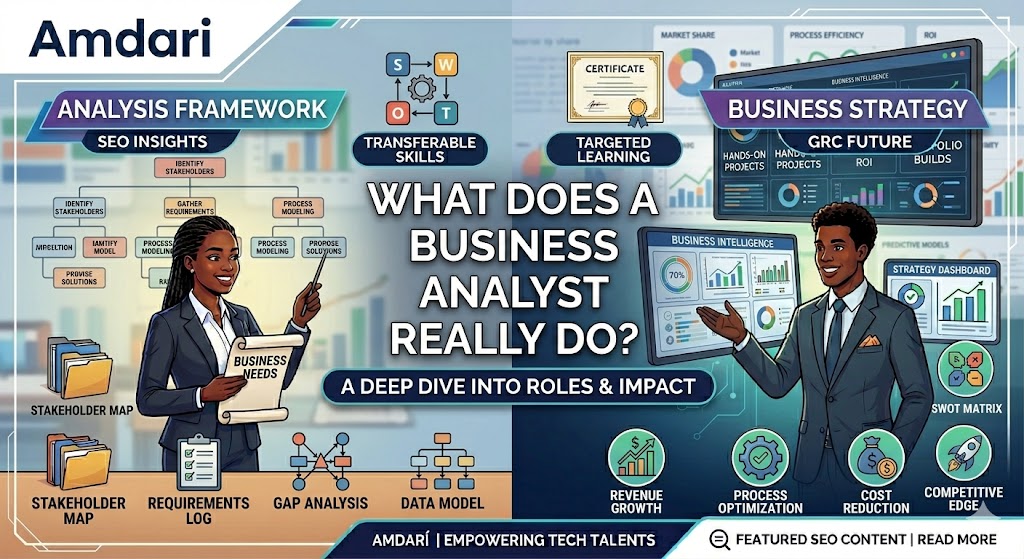
If you ask ten different people what a Business Analyst (BA) does, you’ll likely get ten different answers. To the developers, we’re the ones writing the "tickets." To the executives, we’re the ones with the spreadsheets. To our parents... well, they usually just tell people we work on computers.
But in 2026, the role of a BA has shifted from being a passive middleman to being the strategic engine of a project or a product.
Now lets pull back the curtain
1. The Art of Asking "Why" (Until It Hurts)
The most common misconception is that a BA’s job is to write down what people want.That is wrong,A BA’s real job is to figure out what people actually need even when the stakeholders don’t know it yet.
Most stakeholders start with a solution: “We need a mobile app." A great BA ignores the solution and digs for the problem. Through a process called Elicitation, and use different techniques such as the "Five Whys" technique to get to the root cause.
According to the International Institute of Business Analysis (IIBA), elicitation isn't just "gathering" requirements, it's drawing them out. It’s the difference between a waiter taking an order and a doctor performing a diagnosis.
2. The Universal Translator
Businesses and Technical teams speak two different languages.
Business Speak: "We need to increase customer retention by 15% by Q3."
Tech Speak: "We need to optimize the API calls and implement a Redis cache for the user profile service."
The BA sits in the middle, ensuring nothing is lost in translation. They take high-level Business Requirements and break them down into granular Functional Specifications for both business and technical teams to understand. Example of such are
- When the Business says "I want it to be secure." , The BA translates it to “The system must utilize Multi-Factor Authentication (MFA) and AES-256 encryption for data at rest.”
- When the Business"It should be easy to use." The BA translates it to "The user must be able to complete the checkout process in three clicks or fewer."
- When the Business "I want it fast." The BA translates it to "Page load time must not exceed 2.0 seconds under a load of 5,000 concurrent users."
Are you preparing for your next business analysis role? Take our 5-minute job readiness test to assess yourself.
3. Data Architect & Process Optimizer
A BA doesn't just look at what a system does; they look at how the data flows. In 2026, this often involves working with AI and automated workflows. They create "As-Is" and "To-Be" process maps to show exactly where the bottlenecks are.
Sites like Modern Analyst emphasize that a BA’s value isn't just in documenting a process, but in optimizing it. If you automate a mess, you just get a faster mess. The BA ensures the process is lean before it ever touches a line of code.
4. The Guardian of "Value"
Projects are expensive. Every hour a developer spends coding a "cool feature" that nobody uses is money down the drain. The BA acts as the project’s conscience by performing:
- Gap Analysis: What do we have vs. what do we need?
- Cost-Benefit Analysis: Is this feature worth the $50k it costs to build?
- User Acceptance Testing (UAT): Ensuring that what was built actually solves the original problem.
5. Why You Can’t Just "AI" This Role
With the rise of LLMs, many thought the BA would be obsolete. The opposite is true. While AI can write a user story or create a template, it cannot:
-Negotiate between two department heads who have conflicting goals.
-Identify the political nuances of why a certain stakeholder is resisting change.
-Understand the unique "tribal knowledge" of a 50-year-old company.
As Bridging the Gap often highlights, the "soft skills" of communication, empathy, and critical thinking are what make a BA indispensable.
A Business Analyst is the person who ensures that the right thing is built, the right way, for the right reasons. We are the navigators. The business sets the destination, the developers provide the engine, but the BA makes sure we don’t hit an iceberg along the way.